Leather Repair vs Replacement: When to Repair and When to Replace
In this article
Every week, someone walks into our workshop in Beringen carrying a leather bag, a pair of shoes, or a worn car seat with the same question: is this worth saving? The choice between leather repair vs replacement is rarely obvious, and the answer depends on far more than the price tag of a new item. We are MD LederAtelier, a Swiss leather atelier in Beringen, and this article is our view of when a repair is the smart choice and when it is time to let go.
1. Why Leather Repair vs Replacement Is Not a Simple Price Question
The usual instinct is to compare the cost of a repair with the cost of buying new. That comparison can help, but on its own it misleads. A quality leather item is not disposable. It is made of a natural material that, cared for correctly, improves with age: it softens, takes on a patina, and molds to its owner. A cheap replacement rarely offers any of that.
A customer brings in a bag that belonged to a parent, or a pair of shoes bought on a special trip, and what they want to know is whether the object can be given more life. In those cases the repair does not compete with a new purchase. It is an investment in something that already fits, already carries meaning, and is usually better built than what you would buy for the same money today.
There is an emotional side to this decision, and we respect it. A leather bag is often the most personal thing a person owns. It has traveled, been through seasons, and absorbed the marks of daily use. We would never dismiss that. But we owe every customer the truth, and the truth is that some leather cannot be saved, no matter how much it is loved. We separate the two cases clearly and without pressure.
We never tell a customer to repair something just because it is leather. Sometimes the answer is no, and knowing the difference is the craft.
2. When Repair Is Clearly the Better Choice
Some repairs are almost always worth doing, because the damage is local and the rest of the object is sound. A torn strap, a broken zipper, a loose buckle, a worn corner, a cracked sole on an otherwise healthy shoe: these are failures of a single point, not of the whole item.
A handbag with a snapped shoulder strap is a classic example. The leather body of the bag can be in excellent condition while only the strap has failed. A dress shoe with a worn heel or a cracked sole is another. The upper, the part that has molded to your foot, is still healthy. In both cases the repair fixes one failure and keeps everything else that is still good.
We repair bags, shoes, belts, car seats, and saddlery, and in most cases the leather itself is still in good condition. Leather is strong. When a seam fails or a fitting breaks, the surrounding leather usually has years of life left. Replacing the whole item then means throwing away good material to fix a small problem. It is also usually slower than the repair, which is often a straightforward job for a trained hand.
A leather bag or pair of shoes that has been worn in is comfortable and familiar, while a new one has to be broken in all over again. For shoes especially, a well-fitted, well-made pair that has molded to your feet is often worth more than a new pair that has not.
The short version: if the damage is limited to a specific point and the leather around it is healthy, repair is usually the better choice.
3. When Leather Refurbishment Goes Beyond a Simple Fix
Repair is not the only option we offer, and it is not always the right word for what an item needs. Sometimes a piece requires leather refurbishment: a deeper treatment that restores color, moisture, and structure across the whole surface, not just one damaged spot.
Refurbishment is the difference between patching a scratch and bringing all the leather back. A bag that has faded unevenly, dried out, or lost its color can often be cleaned, recolored, and reconditioned so it looks cared for again. A pair of shoes with scuffed toes and dull leather can be refinished to a uniform, healthy surface. A car seat that has cracked and dried can be restored so the damage does not spread.
The process is methodical. It starts with a thorough cleaning and degreasing, because you cannot restore leather that still holds dirt and old product. Then comes recoloring in thin layers so the surface stays even, followed by conditioning to put moisture back into the fiber, and often a final protection. Each step takes time, and rushing any of them shows up later as uneven color or a surface that cracks again.
Master craftsman Domenico Di Cinque, who leads the work in our atelier, often spends as much time preparing the leather as he does on the visible repair. Cleaning, degreasing, conditioning, and recoloring are what separate a quick patch from real restoration. When the leather is still structurally sound but tired, refurbishment is usually a better use of money than replacement, and the result can look close to new.
4. When Replacement Makes More Sense
Sometimes a repair is not worth it, and we say so directly. A few situations tilt the decision toward buying new.
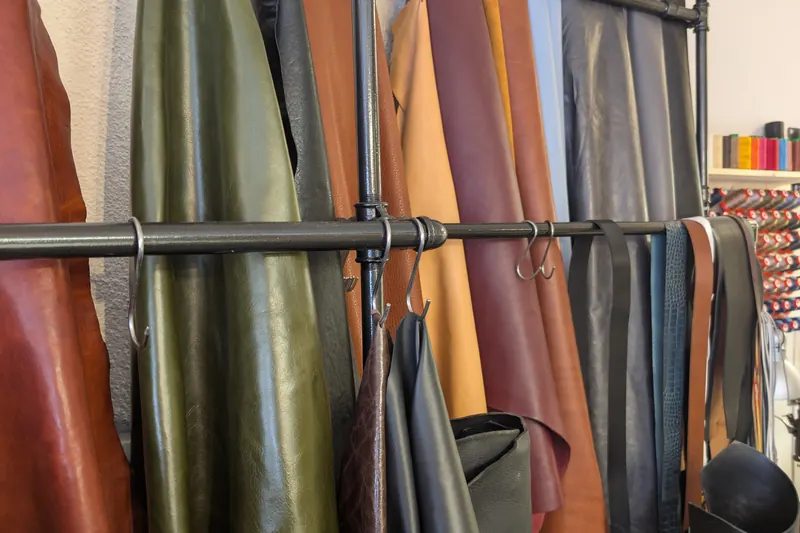
First, structural failure. If the leather itself is torn beyond a clean join, if the fiber of the material is breaking down, or if a shoe sole has worn through to the upper in a way that cannot be rebuilt, a repair would be a patch on a sinking foundation. You would pay for a fix that fails again soon.
Second, the cost of the repair relative to the value of the item. We do not invent numbers, but as an indication, some extensive restorations cost more than a simple, well-chosen replacement. When the item has no particular meaning and the repair would cost more than buying new, replacement is the rational choice. We will tell you this before you spend anything.
Third, safety. Car seats and saddlery are load-bearing. If a structural component of a car seat or a saddle is compromised in a way that affects safety, we will refuse to give it a cosmetic pass. Some things should simply be replaced, and we will tell you if yours is one of them. No amount of polishing fixes a safety risk.
5. How We Decide at MD LederAtelier
The assessment is the most important part of our work, and we give it the time it deserves. When you bring an item to our atelier in Beringen, we look at it as a whole, not just at the visible damage. We check the condition of the leather, the stitching, the fittings, and the structure. Then we give you a straight answer, with an indicative price range before any work begins, so you can decide with full information.
Most conversations with us start with a photo. A clear picture of the damage, plus one of the item overall, is usually enough for a first opinion. It lets us tell you quickly whether the item looks repairable, what the work would involve, and whether it is worth the trip to the atelier. That first look costs you nothing, and it saves both of us time.
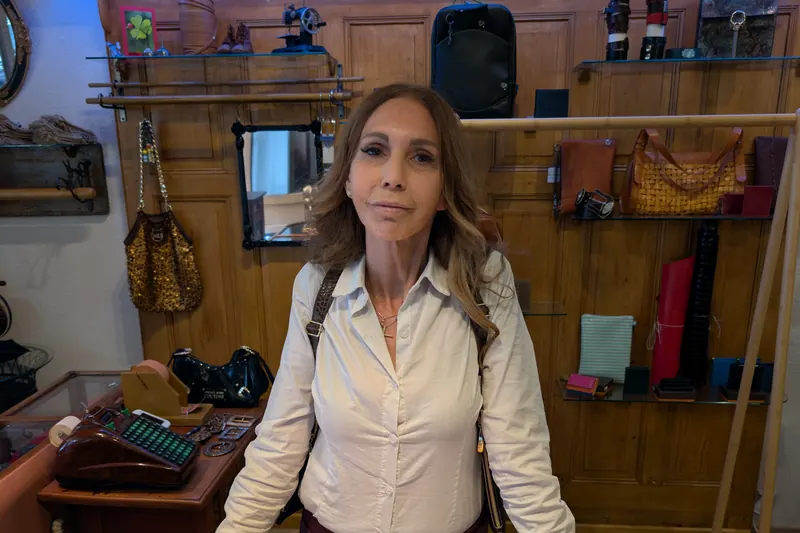
Owner Mary-Salvatrice Catalfamo built the atelier on the idea that a customer should leave knowing exactly what was done and why. We would rather tell you that an item is not worth repairing than take money for a job we know will not last.
Our rule of thumb: if the repair restores function and the material is fundamentally sound, we recommend it. If the repair is cosmetic and the cost approaches replacement, we suggest you think it over. If safety is involved, there is no compromise.
6. What We Can Repair for You
Our workshop handles leather work across a wide range of objects. We repair handbags, briefcases, and backpacks: handles, straps, zippers, corners, linings, and color. We resole and restore shoes and boots, repair belts, and refinish car seats. We also do saddlery work, where precision and safety are non-negotiable.
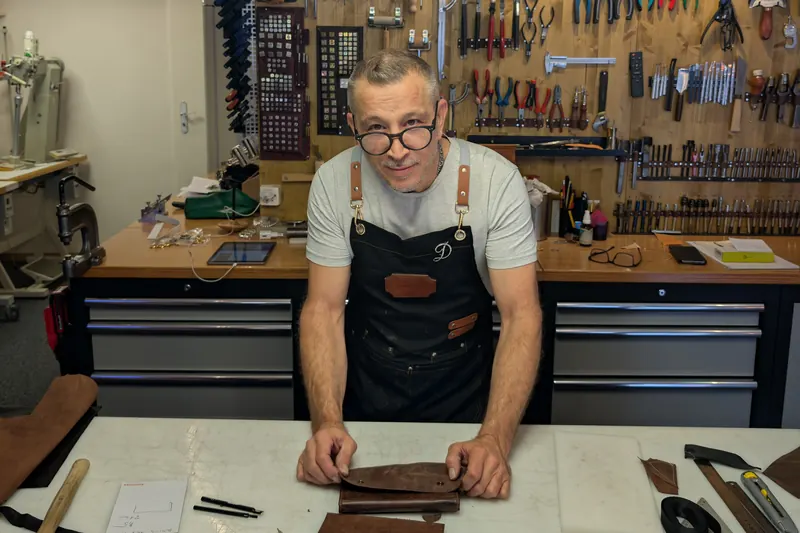
The same bench that restores a designer handbag one morning might rebuild a car seat or a saddle in the afternoon. We work with modern leather and with older pieces that need a gentler touch, and we adapt the treatment to the age and condition of the material instead of applying one standard process to everything.
If you are not sure whether your item can be saved, send us a photo. A quick look is often enough for a first opinion, with no obligation.
If you are weighing leather repair vs replacement, you do not have to make the call alone. Send us a photo or a short message on WhatsApp at +41 76 326 69 99, or reach us through our contact page, and we will give you an assessment and an indicative price before you commit to anything. Your leather has more life in it than you think.
Frequently asked questions
Can a leather bag be repaired?
Often, yes. A torn strap, a broken zipper, a loose buckle, or a worn corner are failures of a single point, and the leather around them usually has years of life left. We repair handles, straps, zippers, corners, linings, and color on handbags, briefcases, and backpacks. If the damage is limited to one point and the surrounding leather is healthy, repair is usually the better choice.
How much does it cost to get a leather bag repaired, and how do I find out?
We look at the whole item, including the leather, stitching, fittings, and structure, and give you an indicative price range before any work begins. Most conversations start with a photo: one clear picture of the damage and one of the whole bag. That first look costs you nothing. Send it on WhatsApp at +41 76 326 69 99 or through our contact page.
When does replacing leather make more sense than repairing it?
In three cases. First, structural failure: if the leather is torn beyond a clean join or its fiber is breaking down, the repair would fail again soon. Second, cost: some extensive restorations cost more than a simple replacement, and if the item has no particular meaning, buying new is rational. Third, safety: we will not give a cosmetic pass to a compromised car seat or saddle.
A piece to repair or a custom idea?
Visit us in Beringen or write to us: quotes are free and without obligation.