Why Leather Repair Is an Art: The Skill Behind Leather Restoration
In this article
Every atelier keeps a drawer of pieces people almost threw away. Ours holds a handbag that arrived with a torn handle and a cracked corner, a pair of shoes already waiting in a donation bag, a belt worn thin at the buckle. Each one left the workbench whole again. Not new. Whole. The distance between new and whole is what leather restoration is about, and it is wider than most people imagine.
Leather is not plastic and it is not fabric. It is skin, and like skin it remembers. It creases where it folds, softens where it is touched, and darkens where the sun has rested on it.
A piece of good leather that has been lived with for ten years carries a record of that life. When it tears, the question is whether it can be brought back to being itself, useful and beautiful, without pretending the damage never happened. That is repair as we understand it at MD LederAtelier in Beringen.
1. What Makes Leather Worth Restoring
Not every piece deserves the work, and we say so. What makes a piece worth leather restoration is the quality of the hide and the honesty of its construction. A bag made from full-grain or vegetable-tanned leather, cut from a single hide and stitched rather than glued, can serve for decades. When a handle gives way or a seam opens, it has not reached the end of its life. It needs care.
The mass market has trained us to think in terms of replacement. When something breaks, we check the price of a new one. But a well-made leather piece is one of the few possessions that becomes more valuable with use.
The patina that forms on a handle, the way a shoulder strap shapes itself to the body, the ease of a zip that has been opened ten thousand times: none of that can be bought new. It has to be earned.
Repairing a piece like this is respect for material that is still doing its job, and it has little to do with frugality.
There is a second reason, a quieter one. A repaired piece keeps its history. The scratch on the flap, the fade across the corner, the initials pressed into the lining all stay. Only the damage disappears. Buying a replacement gives you none of that, and for a lot of people that is the point.
2. Why Leather Repair Is an Art
Repair is easy to describe and hard to do well, which is one reason why leather repair is an art. The final stitch and the coat of finish are not the difficult part. The difficult part is everything that has to be understood before a single tool is picked up.
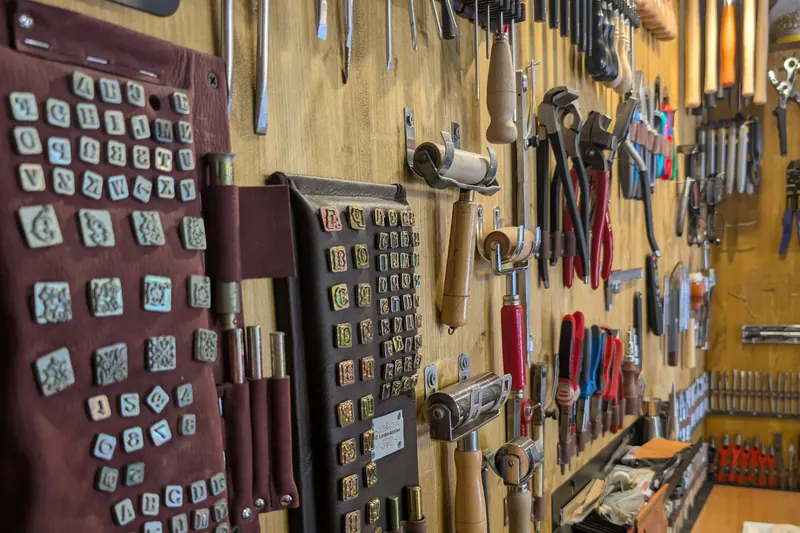
First, you read the leather. Full-grain, corrected-grain, chrome-tanned, vegetable-tanned, waxed, oiled, painted: each type absorbs dye differently, stretches differently, and reacts differently to adhesive and heat. A repair that works on one hide will ruin another. Second, you read the damage. A tear under tension needs different treatment from a scuff on a flat panel, and a crack at a flex point is not the same as a cut in a static area.
Third, you read the piece. Where does it carry weight? Where will the next failure happen if this repair shifts the stress somewhere else?
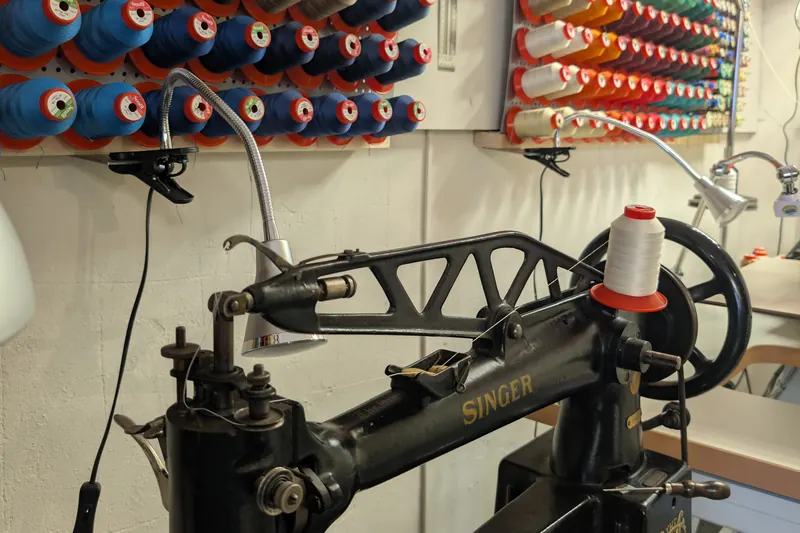
Only then does the craft begin: matching the color so the repair disappears in daylight and lamplight alike, matching the stitch spacing and thread so the new work does not announce itself, reconditioning the surrounding leather so the repaired area does not look healthier than its neighbors. This is why a true restoration is slow. Speed is the enemy of invisibility, and invisibility is usually the goal.
3. The Difference Between a Craftsman and a DIY Repair
There is a place for the repair kit sold at the pharmacy counter, and some jobs we would tell you to do yourself. A shallow scuff on a matte surface or a loose stitch caught before it spreads is within a careful owner’s reach. What separates a craftsman from a do-it-yourself fix is not better glue. It is the ability to see the whole structure while the owner is looking at one hole.
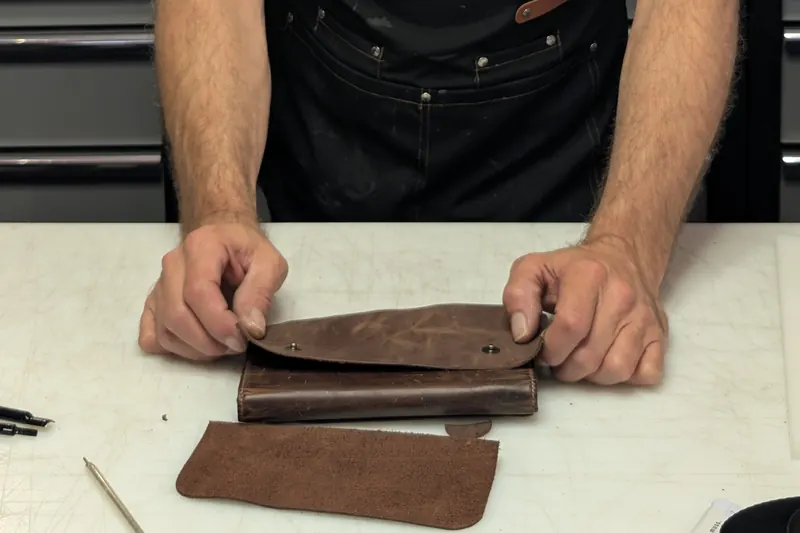
The damage we see most often from home repairs comes from a few understandable mistakes. Contact adhesives cure hard and crack the flexible leather around them. Dyes match in the bottle and turn a different color as they dry.
Stitches are pulled too tight through leather that was never prepared to take them, creating a row of new weak points. This is not incompetence. Repair is a discipline, and like any discipline it rewards the person who has done it hundreds of times.
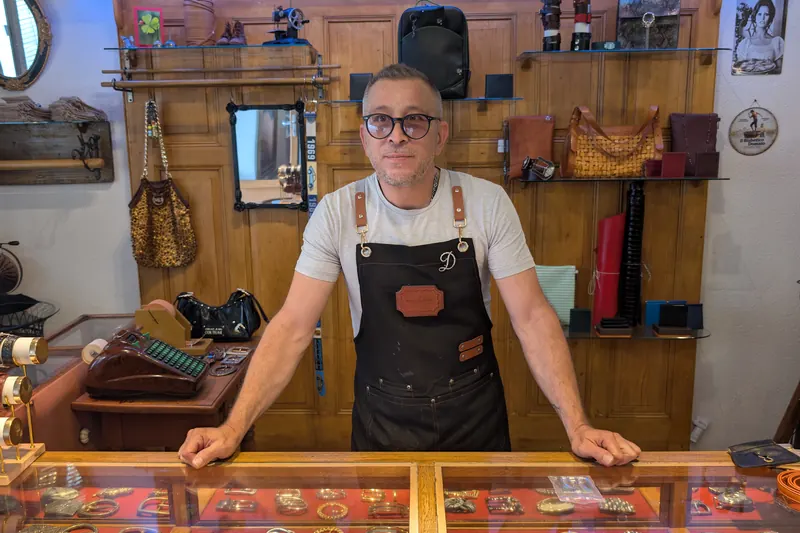
A craftsman like our master craftsman Domenico Di Cinque works from the structure outward. He will open a seam and study how the piece was originally built before he closes it again, because the right repair often means undoing the old work first. He will also tell you when a piece is not worth saving, because a repair that costs more than the piece’s future life is a bill, not a service. That honesty is part of the craft.
4. What Leather Restoration Actually Involves
To see why real leather restoration cannot be reduced to a kit, it helps to know what happens between handing a piece over and picking it up again.
It begins with assessment. We look at the type of leather, the age, any previous repairs, and the points of stress, and we tell you what is possible before any work begins. Not every request can be honored invisibly, and we would rather you hear that before you spend money.
Then comes the work itself. Cleaning removes the oils and grime that would stop a new finish from bonding. Where the damage sits under a seam or a lining, we disassemble carefully. The structure comes next, which may mean re-stitching a seam, replacing a torn panel, rebuilding a handle, or reinforcing a stress point with fresh leather.
Color matching follows, the stage that most separates a professional result from a visible patch: dye is mixed to the exact shade of a hide that has changed color over years, and the finish is blended so the repair reads as part of the piece. Last comes conditioning, so the leather stays supple and the repair ages with the rest of the piece rather than against it.
Cost depends on the piece, the damage, and the hours involved, so we never quote a number without seeing the work. As an indication, a simple seam or stitch repair sits at one end of the range and a full handle rebuild or panel replacement at the other. We would rather give you one honest price after assessment than a confident guess before it.
5. Repair or Replace: How to Decide
Not everything should be repaired. Coated or heavily corrected leather that is peeling cannot be brought back to a clean surface, because the coating itself is failing, not the skin beneath it. A piece whose cost to restore exceeds its practical or sentimental value is better replaced. And a piece that is falling apart in five places at once is often asking to be retired.
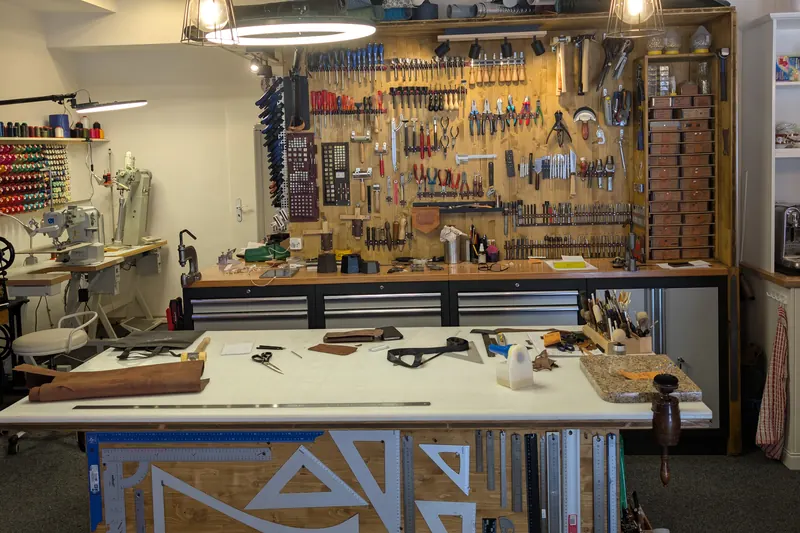
Repair makes sense when the hide is sound and the damage is localized: a torn handle, an open seam, a worn strap, a cracked corner, a split in a car seat, a saddle that needs its stitching and billets renewed.
It also makes sense when the piece means something to you, because a repaired piece keeps its history and gains the story of its second life. When in doubt, send us a photo. The assessment costs you nothing, and we will tell you which side of the line your piece sits on.
6. What We Restore at MD LederAtelier
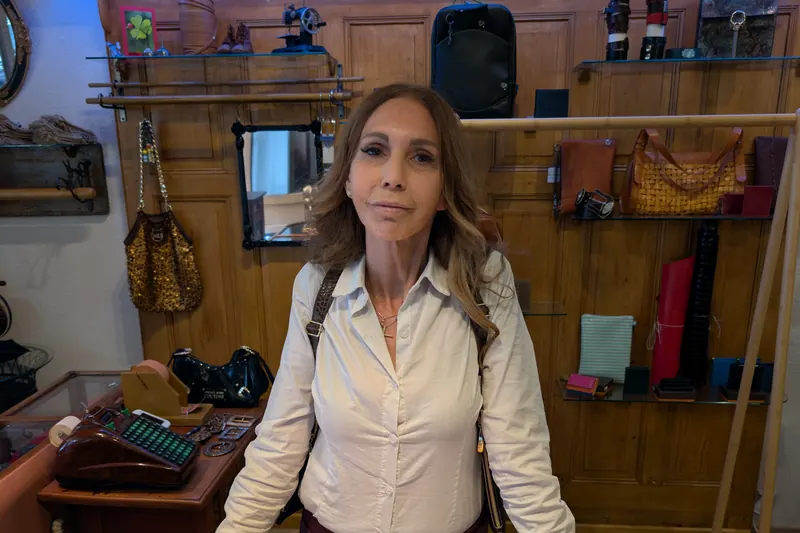
MD LederAtelier in Beringen, Switzerland, is led by Mary-Salvatrice Catalfamo, and our workbench is where master craftsman Domenico Di Cinque practices the craft described above. We restore what people carry, wear, drive, and ride: handbags and travel bags, shoes and boots, belts, car seats, and saddlery. Each piece arrives with its own history and its own failure, and each leaves ready for more years of use.
We do not chase volume, and we do not rush. A restoration worth doing is worth doing slowly enough to do it invisibly.
If a bag, a pair of shoes, or a saddle you love is waiting in a drawer, send us a photo and we will tell you whether leather restoration can bring it back. Reach us on WhatsApp at +41 76 326 69 99 or through the contact page on our site. Bring us a piece worth saving, and we will show you why the repair is an art.
Frequently asked questions
Do leather restorers really work?
Yes, when the work is done by hand and in order: assessment, cleaning, structure, color matching, and conditioning. The piece comes back whole, not new. The scratch on the flap, the fade across the corner, and the initials in the lining all stay, and only the damage disappears. Not every request can be honored invisibly, and we tell you that before you spend money.
Can I repair leather myself?
For small things, yes. A shallow scuff on a matte surface or a loose stitch caught before it spreads is within a careful owner's reach. Bigger jobs often go wrong at home. Contact adhesives cure hard and crack the flexible leather around them, dyes turn a different color as they dry, and stitches pulled too tight create a row of new weak points.
When is leather worth repairing?
When the hide is sound and the damage is localized: a torn handle, an open seam, a worn strap, a cracked corner, or a split in a car seat. It also makes sense when the piece means something to you. Coated leather that is peeling cannot be brought back, because the coating itself is failing. When in doubt, send us a photo. The assessment costs you nothing.
A piece to repair or a custom idea?
Visit us in Beringen or write to us: quotes are free and without obligation.