Leather Repair Cost: What a Professional Repair Really Costs
In this article
You bring us a handbag with a broken strap, a pair of boots with a worn sole, a belt that has cracked along its crease. The first question is almost always the same: how much will it cost? It is a fair question and it deserves a straight answer.
Leather repair cost is not a flat number. It depends on three things we can see clearly in our workshop in Beringen: what the item is made of, how deep the damage goes, and how many hours of careful handwork it will take to make it right.
1. What Determines Leather Repair Cost
When we quote a repair, we are pricing three separate things.
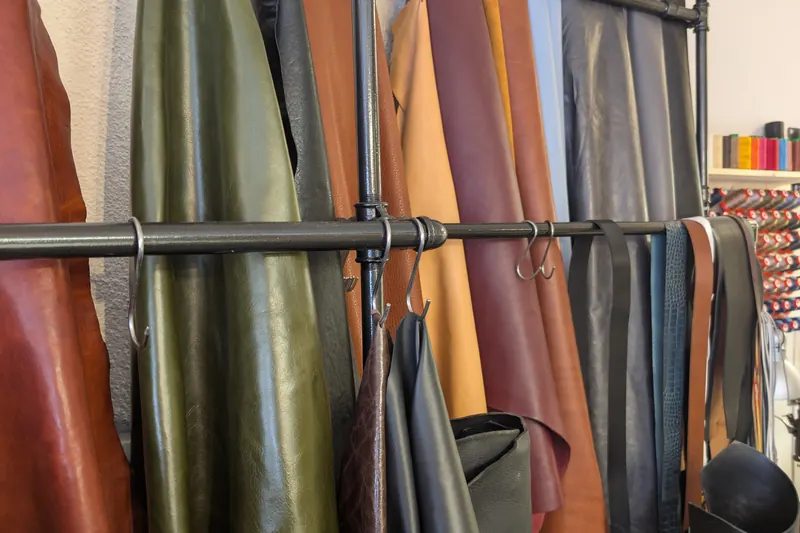
The first is material. Leather is not one product. A full-grain hide from a small tannery costs more than a corrected-grain panel, and exotic skins cost more again. When we replace a panel or a strap, the cost of the leather itself, plus the matching dye, edge paint, and thread, goes into the quote.
The second is the damage. A light scuff needs only surface work. A torn seam has to be opened, cleaned, and re-stitched. A handle that has torn out of the bag body needs structural reinforcement, not just a stitch. The deeper the damage, the more steps the repair takes.
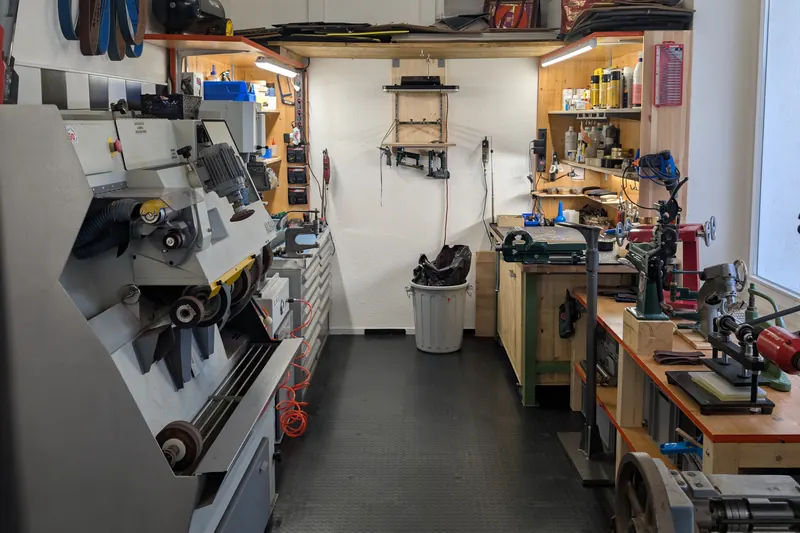
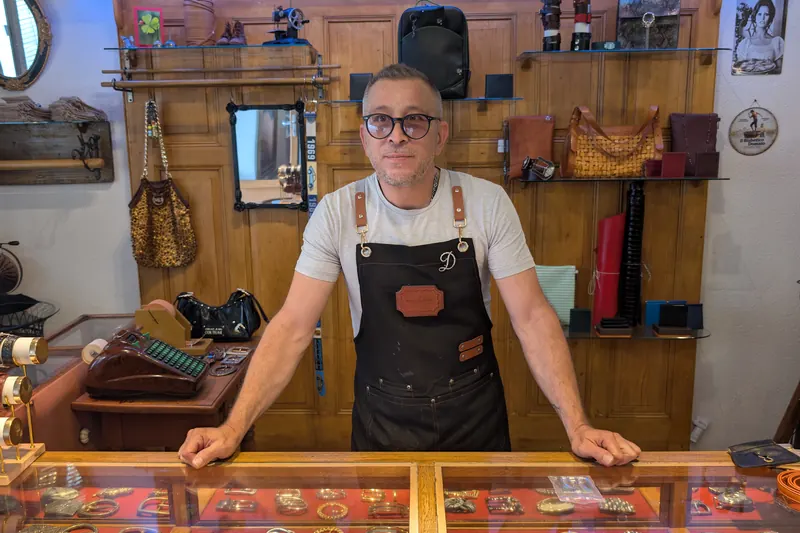
The third, and usually the largest, is labor. Our master craftsman, Domenico Di Cinque, works mostly by hand. No machine can feel the tension of a stitch or judge when a dye matches under daylight. Skilled time is the heart of leather repair cost: you are paying for a craft, not a factory process.
2. The Material: What Your Item Is Made Of
Before we touch a single stitch, we look at what we are working with. The material decides what a repair can and cannot do.
Full-grain leather is the top surface of the hide, and it ages beautifully. It repays repair well, because a good color match and a careful stitch can blend almost invisibly into the original.
Corrected-grain leather has a printed, sealed surface and is harder to blend: a patch will often need a complete refinish rather than a local touch-up. Suede and nubuck are delicate, and cleaning alone is a specialty. Exotic skins such as lizard or ostrich are unforgiving and demand more time and a steadier hand.
We also check what sits under the leather. A bag with a cheap lining or a broken internal structure may look fine outside and hide real problems inside. The material question covers everything the item is built from, not only the skin.
The same goes for color. Matching a dark brown is a different job from matching a red or a pastel. Dyes are mixed by eye, layer by layer, until the repair disappears into the original surface. Some colors take minutes. Some take the better part of an hour, and that time shows up in the quote.
3. The Damage: How Much Work Is Really Needed
People often describe damage in the same words, but the repair behind those words can differ a lot. We sort every job into three levels.
Light surface damage means scuffs, fading, and small scratches. This is usually color work: cleaning, matching the dye, and refinishing the surface. It is the most affordable kind of repair because it rarely needs disassembly.
Medium damage means seams, zippers, and worn edges. A popped seam has to be opened and re-stitched, often by hand. A failing zipper on a bag is one of the most common repairs we do, and it is more work than it looks, because the zipper is sewn into the bag structure before the lining goes in. Reaching it means opening and closing layers carefully.
Structural damage means a torn handle, a ripped panel, a broken frame, or a car seat with a split along the bolster. This is where the craft shows. We do not just patch over the tear. We cut a new piece, skive the edges so they sit flat, match the grain and color, and stitch it in so the repair carries load again. This kind of work can take a full day or more.
Our rule: the repair has to be strong enough that you can use the item the same way you did before. If we cannot promise that, we tell you before we start.
4. Professional Leather Repair: The Hours Behind the Price
This is the part most people do not see, so it is worth explaining.
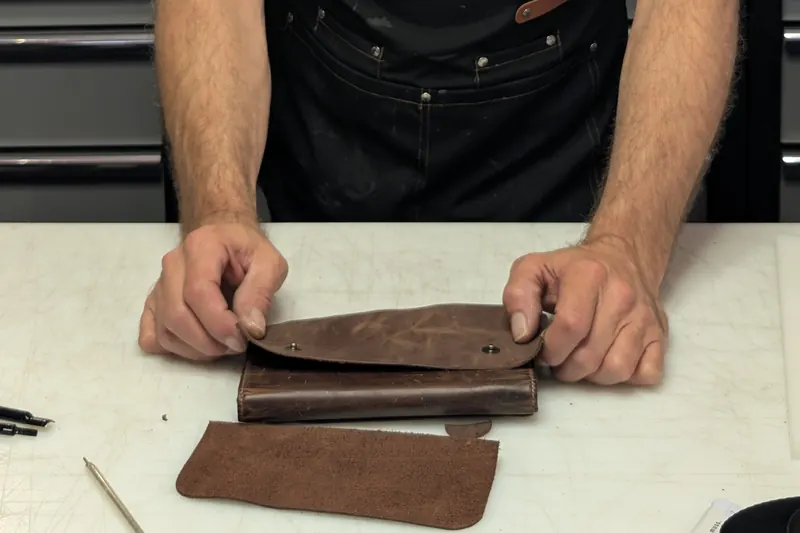
Professional leather repair is slow because the work is done by hand, in steps, with drying time between them. A typical job moves through assessment, disassembly, cleaning, cutting and matching, stitching, finishing, and final conditioning. Each stage has to dry or set before the next begins. A color match can take an hour. A stitch line that follows the original holes can take another. None of it can be rushed without showing.
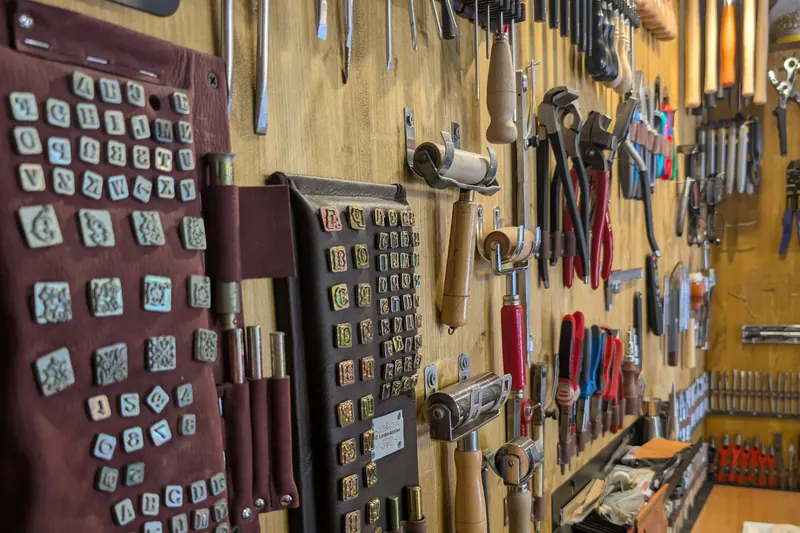
We also work with tools that reward practice rather than speed: hand awls, edge bevelers, heated creasers, and dyes mixed by eye. A machine can stitch a straight line in seconds, but a repair on a curved gusset or around a handle ring cannot be done by machine at all. It takes a person who has stitched that shape hundreds of times.
When you pay for professional leather repair, you are paying for that person’s time and judgment. The hours are the price, and we would rather say so than hide labor inside a vague service fee.
We also separate repair from restoration. A repair fixes the thing that is broken. A restoration brings the whole item back to how it looked and felt when it was new, and it takes considerably longer. A handle can be repaired in an afternoon. A full restoration of a handbag, with every panel cleaned, re-dyed, and conditioned, is a project measured in days. They are different jobs at different prices.
5. Honest Price Ranges, Clearly Labeled
We want to give you numbers, so here they are. Read them as what they are.
Every figure below is an indicative starting range, not a fixed quote. The only way to know what your item will cost is for us to see it, because two torn straps can sit at opposite ends of the scale. Prices are in Swiss francs and are general, based on the work we do day to day in Beringen.
Small scuffs and color touch-ups on a small area: roughly CHF 30 to 60.
Re-stitching a seam or a strap by hand: roughly CHF 40 to 90.
A zipper replacement on a handbag: roughly CHF 60 to 140, depending on how the bag is built.
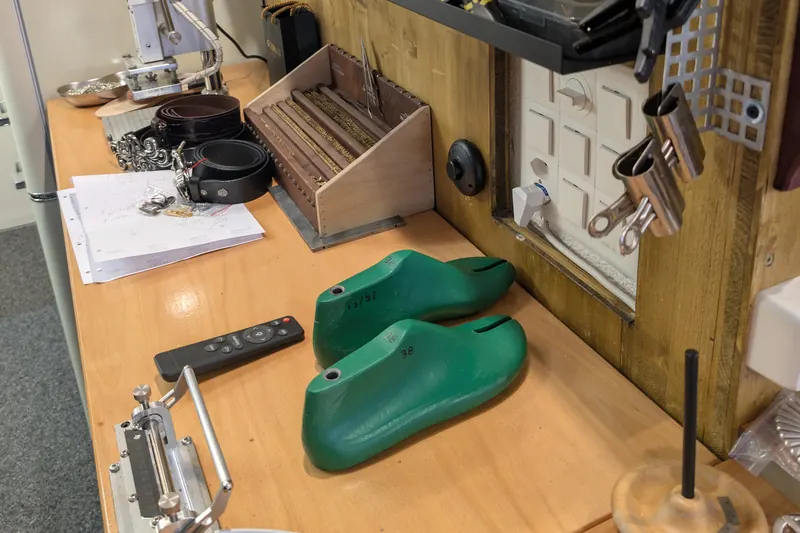
A sole replacement or half-sole on leather shoes: roughly CHF 60 to 120.
A handle replacement on a handbag: roughly CHF 80 to 180, depending on the hardware.
A panel or bolster replacement on a car seat: roughly CHF 150 to 400.
A full restoration of a well-worn handbag, inside and out: roughly CHF 200 to 600 and up.
These ranges are there so you can plan, not so you can hold us to a number we have not earned by inspecting your item. Before any work begins, we agree on the price with you. If the repair does not make sense, we will say so and recommend something else.
6. Why Repair Often Beats Replacement
The instinct to replace is strong, and sometimes it is right. If the leather is worn through everywhere and the structure is failing, a new item can be the wiser path. More often than people expect, though, the opposite is true.
A well-made leather bag, a good pair of boots, or a familiar saddle is hard to replace, because the new version is rarely the same quality for the same money. Older full-grain leather, once broken in, is often better than what sits on the shelf today. Repairing it keeps that character, and it keeps the thing you already chose, already like, and already trust.
There is a practical side too. Repairing a single worn component is usually cheaper than buying a quality replacement, and it keeps a working item out of the waste stream. Leather is a material meant to be repaired, which is one reason it lasts for decades when it is cared for.
We will give you the honest version of this trade-off for your specific item. Sometimes that means repairing. Sometimes it means telling you to save your money.
If you have a bag, a pair of shoes, a belt, a car seat, or a piece of saddlery that needs attention, send us a photo and a short description. Mary-Salvatrice Catalfamo and our master craftsman Domenico Di Cinque will look at it, tell you what can be done, and give you a clear price before any work starts.
That is how leather repair cost should work: no surprises and no vague estimates. Reach us on WhatsApp at +41 76 326 69 99, or through the contact page on our site.
Frequently asked questions
How much does leather repair cost?
It depends on your item, and every figure is an indicative starting range, not a fixed quote. Small scuffs and color touch-ups run roughly CHF 30 to 60, re-stitching a seam or strap CHF 40 to 90, a handbag zipper replacement CHF 60 to 140, and a handle replacement CHF 80 to 180. Before any work begins, we agree on the price with you.
What decides the price of a leather repair?
Three things: the material, the damage, and the labor. Full-grain leather costs more than a corrected-grain panel, and exotic skins cost more again. A light scuff needs only surface work, while a handle torn out of the bag needs structural reinforcement. Labor is usually the largest part, because the work is done mostly by hand, with drying time between the steps.
Is leather repair worth it, or should I buy new?
Often repair wins. A well-made leather bag or a good pair of boots is hard to replace, because the new version is rarely the same quality for the same money. Repairing a single worn component is usually cheaper than buying a quality replacement. If the leather is worn through everywhere and the structure is failing, new can be wiser, and we will tell you so.
A piece to repair or a custom idea?
Visit us in Beringen or write to us: quotes are free and without obligation.